Poggetto carni
For consumersPersonal purchases
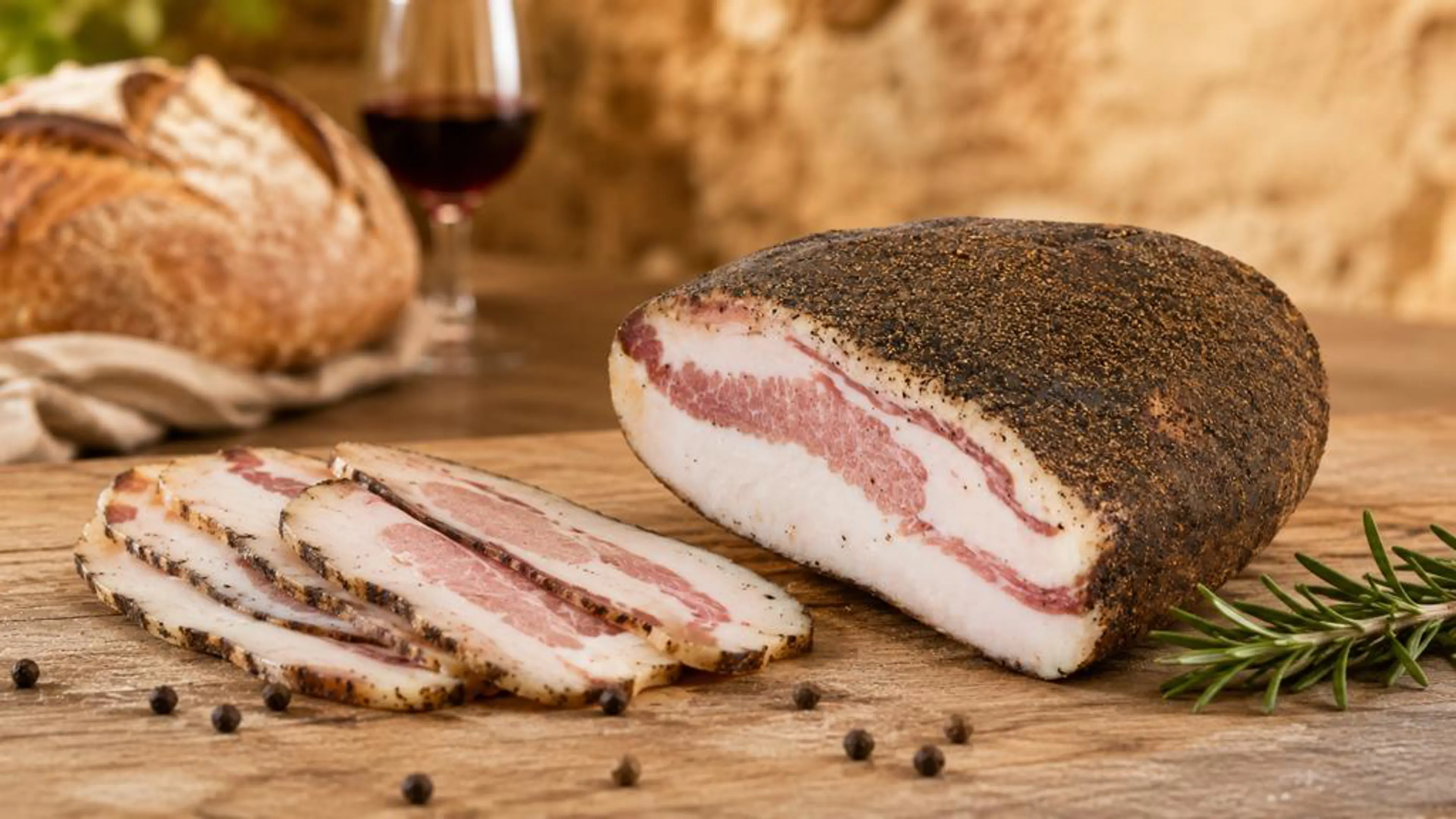
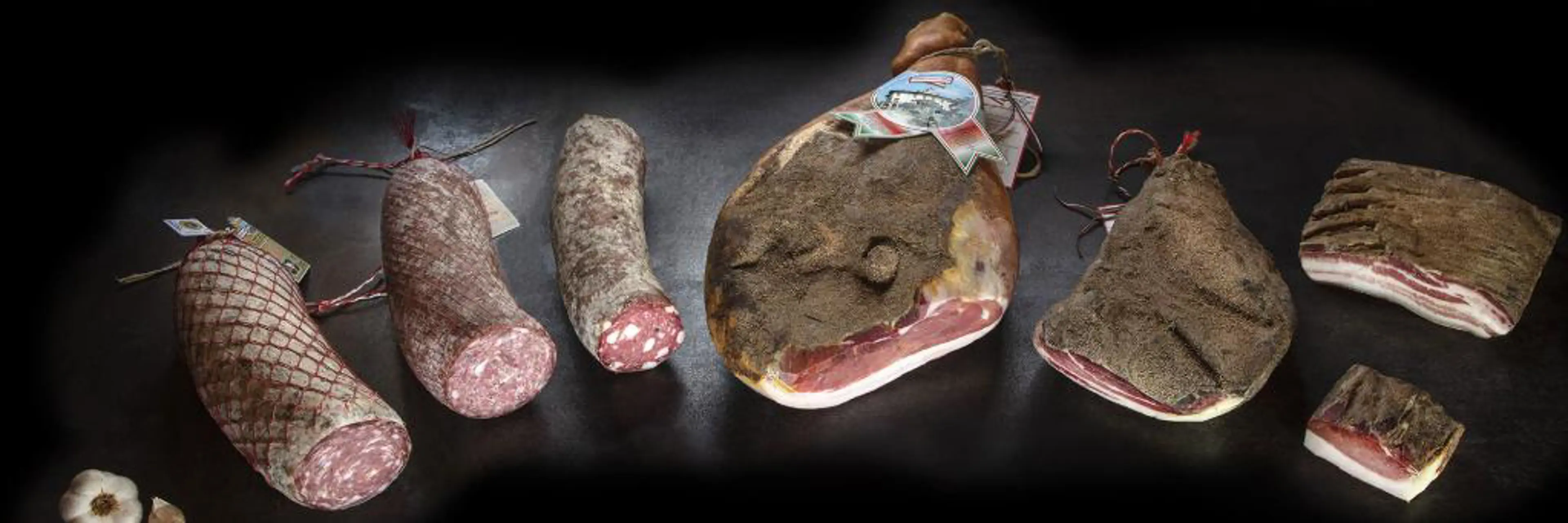
Guanciale is one of those cured meats that divide Italy into schools of thought. Those who know it as the star ingredient of carbonara instinctively think of Lazio. Those who have been eating it for centuries on the Tuscan charcuterie board tell the story in a completely different way. It’s not a question of which one is "the real guanciale": they are two parallel traditions, with two different recipes, two different uses, and two clearly distinct flavors.
In this guide, we’ll see what distinguishes Tuscan guanciale from Lazio guanciale, how to recognize them, and how to choose the right one depending on what you want to do with it.
Before distinguishing the two schools, a clarification on the basics. Guanciale is a cured meat made from the pig’s cheek - the anatomical part that goes from the jaw to the throat. It is a particular cut: fattier than pancetta, with a soft yet compact texture, and a much more intense flavor thanks to the richness of the fat.
It should not be confused with pancetta, which comes from the animal’s belly. Beyond the anatomical difference, there are substantial differences in flavor and texture: guanciale has a stronger aromatic note and a denser fat structure, which, when it melts in the pan, releases a flavor pancetta cannot provide.
Like all cured meats, guanciale is salted by hand, flavored with spices and herbs, and left to cure for weeks or months. And this is where the two schools come into play.
The best-known version in the rest of Italy - and abroad - is the Lazio one. It is the guanciale found in carbonara, amatriciana, gricia, and sauces with handmade pasta. Its homeland is central Italy, between Lazio and Abruzzo, with the town of Amatrice as the historical and symbolic reference.
How it is made
The traditional recipe for guanciale amatriciano calls for a simple but bold seasoning: salt, ground black pepper, often peppercorns on the surface. Some recipes add chili pepper, and some producers use wine in the curing mixture. Curing is long: at least 3 months, often 4-6 months, to develop the dryness and intensity that make it ideal for cooking.
The flavor
Lazio guanciale has a strong, very savory flavor, with a distinct pepper note. The fat is dense and firm, not crumbly when sliced. It is a guanciale designed to be cooked: raw, it may seem excessive, but as soon as it hits the pan it releases an aroma and flavorful fat that are the real secret behind the traditional Roman pasta dishes.
How it is used
Its main use is in cooking, cut into strips or cubes and browned until crisp. The rendered fat becomes the aromatic base for carbonara, amatriciana, and gricia. To a lesser extent, it is eaten raw, thinly sliced, but it is more often considered an ingredient than a charcuterie board cured meat.
The Tuscan version is less well known nationally, but it has an equally solid tradition - just a different one. In Tuscany, guanciale was not born with carbonara in mind, which is a relatively modern recipe. It was born as a cured meat for the charcuterie board, meant to be enjoyed in thin slices with bread, together with the other cured meats of the local tradition.
How it is made
The Tuscan recipe uses a more complex blend of flavors: salt, ground pepper, granulated garlic, and cloves. Curing is shorter than the Lazio version - typically around 3 months - precisely because Tuscan guanciale does not need to become extremely dry for cooking, but rather to remain soft enough to be pleasant when eaten raw.
The flavor
Tuscan guanciale has an aromatic, enveloping flavor, less forceful than the Lazio one but more complex on the nose. The cloves add a warm note that blends with the sweetness of the fat; the granulated garlic enriches the taste without being overwhelming. The texture is softer, less dry, suitable to be enjoyed even without cooking.
How it is used
In Tuscany, its main use is raw, on the charcuterie board, thinly sliced alongside finocchiona, Tuscan salami, cured ham, and other local cured meats. But Tuscan guanciale also works very well cooked - it just gives a different result: less dry and more fragrant than the Lazio version, with a spiced note that carries through the dish. Some Tuscan cooks use it to flavor beans, ribollita, and winter soups.
If we had to summarize the main differences between the two schools, we could say this:
Ingredients and seasonings: the Lazio version is more essential (salt, pepper, sometimes chili), the Tuscan one more layered (adding garlic and cloves).
Curing: longer for the Lazio version (typically 4-6 months), shorter for the Tuscan one (around 3 months).
Texture: the Lazio version is drier and denser, the Tuscan one softer.
Flavor: the Lazio version has a decisive savoriness dominated by pepper, the Tuscan one is more aromatic and complex.
Main use: the Lazio version is meant for cooking, the Tuscan one for enjoying sliced as part of a board. But both work in both ways, just with different results.
The answer depends on what you want to do with it. There is no single best guanciale - there are two different products with different characteristics.
Choose Lazio guanciale if...
...your main goal is cooking, especially the traditional Roman first courses. If you are making carbonara, amatriciana, or gricia, the Lazio version is the one designed for that purpose: its dense fat and long curing deliver the result those recipes call for.
Choose Tuscan guanciale if...
...you want a charcuterie board cured meat that brings something different from the classic ham and salami. If you are building a Tuscan charcuterie board, the local guanciale is a perfect choice: it adds an aromatic note and a softness that the other cured meats do not provide. And if you also like cooking, know that it works - it just brings aromas that the Lazio version does not have, and that can be either an advantage or a limitation depending on the dish.
Can Tuscan guanciale be used for carbonara?
Yes, it can. The traditional recipe calls for Lazio guanciale, but the Tuscan version gives an interesting result - more fragrant, with a note of cloves that some people really like and others find out of place. It’s a matter of personal taste and how attached you are to the orthodoxy of the Roman recipe.
Can guanciale replace pancetta?
Only partially. They are two different products, with different textures and flavors. Guanciale has more fat and a stronger aroma, while pancetta is leaner and more delicate. In some dishes (sauces, soups) one can replace the other without too much trouble. In others (authentic carbonara, delicate salads) you really notice the difference.
How do you store guanciale once opened?
If bought vacuum-packed, once opened guanciale should be stored in the refrigerator wrapped in kitchen paper (to absorb moisture) and eaten within a few days. If bought whole and loose, it keeps longer (up to several weeks) as long as it is kept in a cool, dry place, with the cut side protected by a clean cloth or aluminum foil.
Does guanciale contain gluten or lactose?
In the traditional recipe of either school, no. The ingredients are pork, salt, seasonings, and possibly preservatives - none of these contain gluten or dairy derivatives. The label will always clearly state whether the product is certified gluten free and lactose free.
At our facility in Poggio a Caiano, Tuscany, we produce guanciale according to the Tuscan method: 100% Italian pork, flavored with granulated garlic, cloves, and ground pepper. Minimum curing of 3 months, hand processing, and a surface coating of spices that gives the cut that characteristic aroma of Tuscan tradition.


