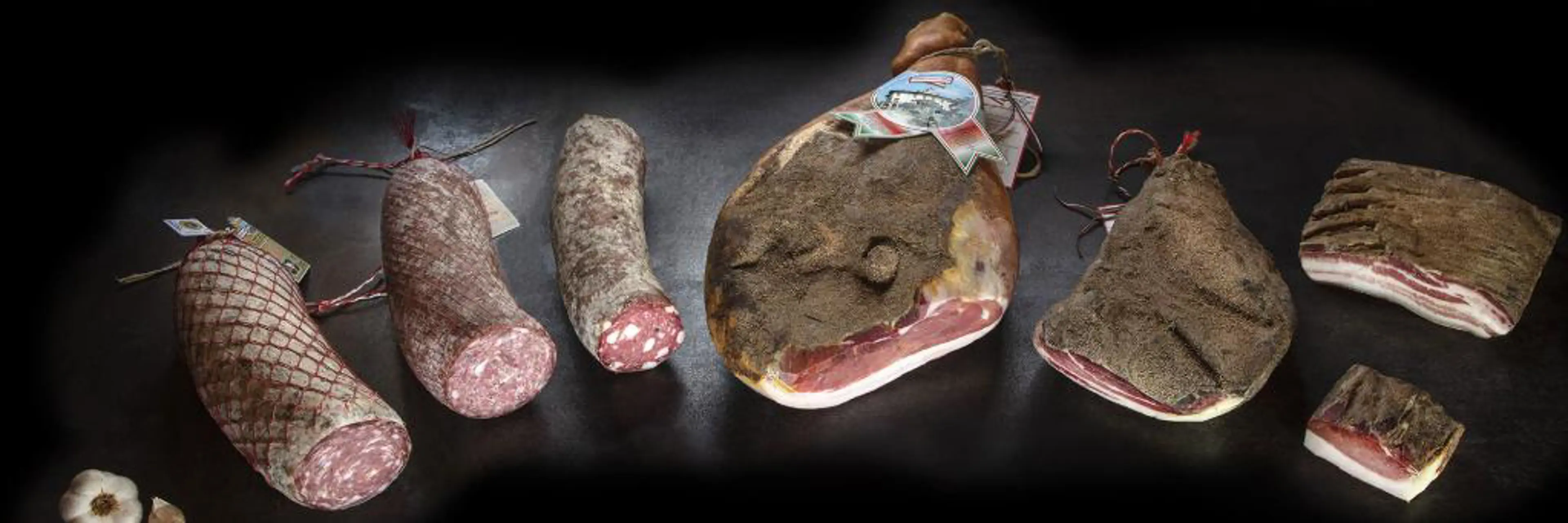

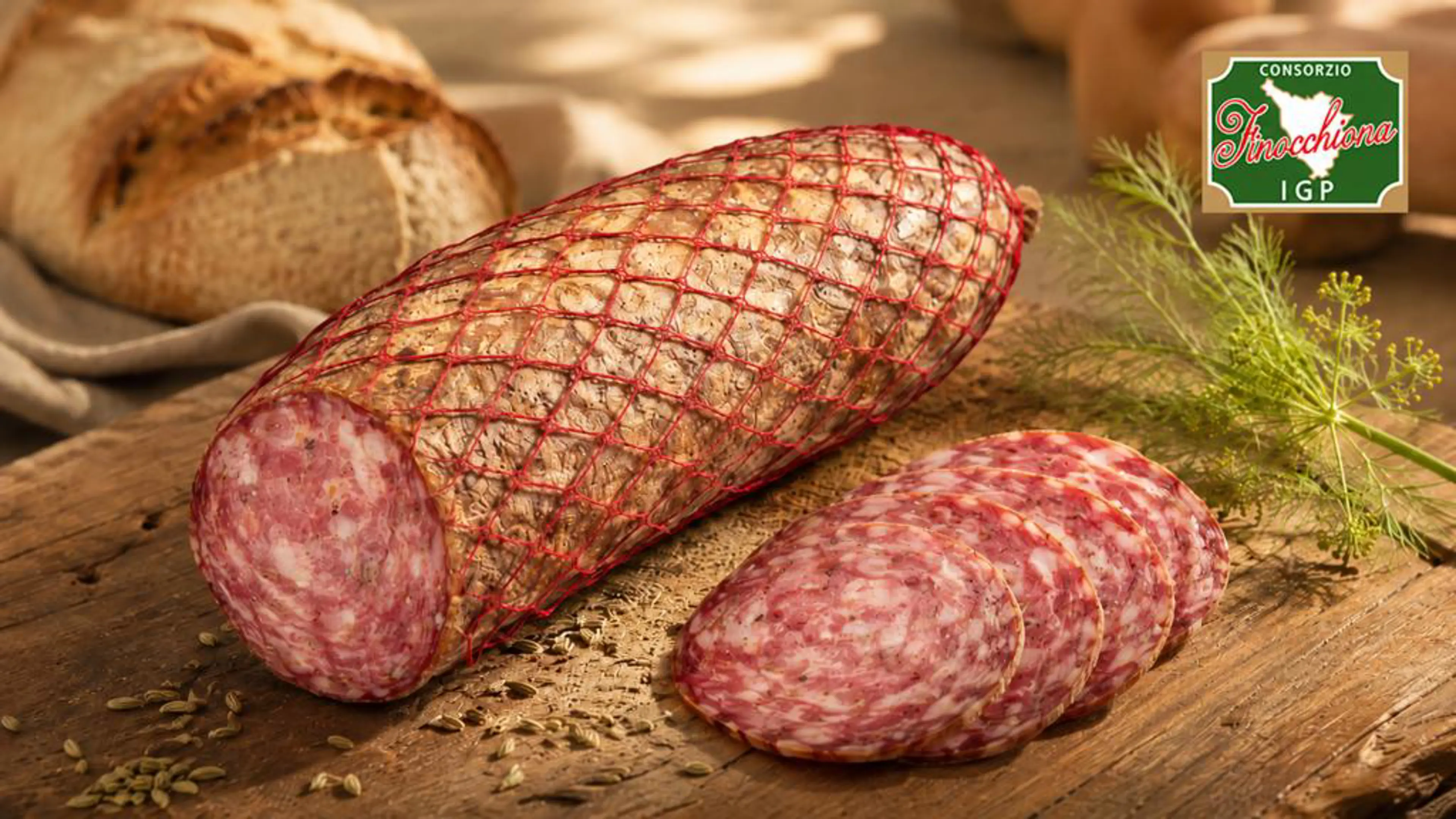
Finocchiona is one of those cured meats that immediately makes you think of Tuscany. You can recognize it even before tasting it: when sliced, it releases such a distinctive fennel seed aroma that it can’t be mistaken for any other Italian salami.
Since 2015, Finocchiona has been protected by the IGP mark - Protected Geographical Indication - which certifies its origin, ingredients, and production method. In this guide, we’ll look at what Finocchiona IGP really is, how to recognize a well-made version, and how to bring it to the table in a way that enhances its flavor.
Finocchiona is a pork cured meat flavored with fennel seeds, typical of Tuscany. It is a medium-grind salami, with lean meat and well-distributed fat, a bright red color, and an intense aroma.
Since 2015, the name "Finocchiona" has been protected at European level thanks to IGP recognition (EU Regulation 2015/629). The IGP mark guarantees that the cured meat is produced in Tuscany according to a precise specification that regulates the ingredients, curing times, and production method. The Finocchiona IGP Protection Consortium oversees compliance with the specification and the correct use of the name.
In practice, if the package doesn’t have the IGP logo, you are not buying certified Finocchiona. You may find similar cured meats called "salame ai semi di finocchio" or "finocchiona toscana" without the IGP mark: these are products that follow the same tradition but do not fall under the Consortium’s specification.
Finocchiona was born in Tuscany, and its tradition is rooted in centuries of peasant culture. A popular legend even links it to the Middle Ages: it is said that fennel seeds were first used to flavor the salami when pepper - at the time extremely expensive because it was imported from the East - was beyond the reach of most people. Tuscan farmers would have replaced pepper with wild fennel seeds, abundant in the hills of the region.
Legend aside, what is certain is that wild fennel grows spontaneously throughout Tuscany and has always been part of local cuisine. The idea of using it to flavor cured meats is probably older than the first written records. By the Renaissance, Finocchiona was already so appreciated that it appeared on the tables of Florentine nobility - it is said that even Lorenzo the Magnificent was a fan.
Today, Finocchiona IGP is produced throughout Tuscany, with particular concentration in the provinces of Florence, Prato, Pistoia, Siena, and Arezzo.
The Finocchiona IGP specification calls for simple, well-defined ingredients: pork (shoulder and belly), salt, pepper (ground and in peppercorns), garlic, fennel seeds, sugars, and permitted preservatives. No added protein, no artificial flavoring.
Production follows tradition: the meat is ground to a medium grain, mixed with salt and seasonings, and stuffed into natural or synthetic casings. This is followed by a drying phase in a controlled environment and then the actual curing, which depends on the size: for smaller formats, the specification requires at least 15 days; for larger formats, it can take several months.
One detail that makes a difference is the quality of the fennel seeds: in artisanal production, selected seeds are used, often from Tuscan crops, and when sliced they can be clearly seen distributed throughout the mixture. On the nose and on the palate, fennel should be clearly perceptible without overpowering the flavor of the meat.
When buying, there are a few signs that help you understand whether a Finocchiona is well made:
The IGP logo on the package
This is the first check. The yellow-and-blue EU IGP mark and the Finocchiona IGP Consortium logo guarantee that the product complies with the specification. Without the logo, the cured meat may be good, but it is not certified.
The color and the slice
A well-made Finocchiona has a bright red color, with clearly visible, well-distributed white fat. The fennel seeds should be visible in the slice, evenly spread throughout. If the color is too dark or too pale, if the fat is yellowish, or if the seeds are concentrated only in certain areas, it is a sign of rough production.
The aroma
The fennel seed aroma should come through immediately as soon as the slice is cut, but it should not be overwhelming. If the aroma is weak or absent, it often means the seeds used were not very aromatic or were old. If, on the other hand, it is too sharp, fennel powder flavoring may have been added to make up for poor-quality whole seeds.
The taste
On the palate, Finocchiona should be soft, with sweet meat and fat that melts in the mouth. The fennel seeds should provide an aromatic finish that cleanses the mouth, not a bitter aftertaste. Salt and pepper should be balanced: never excessive.
On its own, thinly sliced
The simplest way - and the best way to appreciate it - is to slice it thin at the last moment and serve it on a white ceramic plate, with nothing added. Finocchiona shows its best side when it can be enjoyed plain, so you can appreciate the flavor of the meat and the scent of fennel.
Practical tip: if you buy it whole or in a piece, cut the slices just before serving with a sharp knife or a slicer. Vacuum-packed Finocchiona loses some of its aroma if it stays sliced too long before being eaten.
On a Tuscan charcuterie board
On a Tuscan cured meat board, Finocchiona is a must. Its fennel aroma balances the stronger flavors of aged Tuscan salami and soprassata, and it pairs well with cooked cured meats such as pancetta cooked in lard. A good Tuscan board typically includes cured ham, finocchiona, Tuscan salami, and one or two cooked or special cured meats (such as truffle salami).
Serve it with unsalted Tuscan bread - its neutrality is designed precisely to enhance the flavor of cured meats - and Tuscan crostini (with liver or olive pâté).
In cooking
Although the traditional way is to serve it uncooked, Finocchiona also works well in some cooked dishes. Cut into small cubes, it enriches pasta sauces, savory tart fillings, and warm salads with beans or spelt. Be careful not to cook it too much: losing the fennel aroma defeats the purpose.
A simple idea: hot crostini with Finocchiona and fresh cheese (stracchino, ricotta, robiola). The heat of the freshly toasted bread warms the cured meat slightly without cooking it, and the two flavors blend in a surprisingly good way.
With wine
The classic pairing is with a medium-bodied Tuscan red: a young Chianti Classico, a Morellino di Scansano, or a Rosso di Montalcino. Round wines that are not too tannic, which accompany the sweetness of the meat without overpowering it.
A less obvious alternative: Finocchiona also stands up well to some structured Tuscan whites, such as an aged Vernaccia di San Gimignano or a Vermentino from the coast. The acidity of the white wine cleanses the palate from the fat and enhances the fennel.
With bread and cheese
As mentioned, unsalted Tuscan bread is the natural pairing. Alternatively, rustic bread or schiacciata with olive oil - as long as they are not flavored, otherwise they will cover the fennel.
For cheese, the best companions are hard Tuscan cheeses: aged Pecorino Toscano, Pecorino di Pienza. The cheese’s fat balances the savoriness of the cured meat, and both products share the same place of origin.
Why is it called Finocchiona?
The name comes from fennel seeds, the distinctive ingredient that sets it apart from all other cured meats. "Finocchio" plus the augmentative suffix "-ona", typical of the Tuscan language for describing something important or abundant.
What is the difference between Finocchiona and Sbriciolona?
Sbriciolona is a variation of Finocchiona with a shorter curing time. It has the same base (Tuscan pork, fennel seeds) but is eaten young, after just a few days of curing. The result is a softer cured meat that tends to crumble when sliced - hence the name. Sbriciolona is not part of the IGP because it does not meet the minimum curing times and organoleptic requirements set by the specification.
Does Finocchiona contain gluten?
In the traditional recipe, no: the ingredients are meat, salt, seasonings, and preservatives, none of which contain gluten. Many Finocchiona products on the market are labeled "gluten free". However, be careful with industrial products that may contain additives with gluten or be processed in facilities with cross-contamination: if you have celiac disease, always look for the "gluten free" label on the package.
How long does Finocchiona last once opened?
Once the vacuum pack is opened, Finocchiona should be kept in the refrigerator wrapped in a sheet of kitchen paper (to absorb moisture) or in an airtight container. Eat it within a few days to enjoy its full aroma: over time, the fennel seed aroma tends to fade.
Since when has Finocchiona been IGP?
The name "Finocchiona" has been protected at European level since 2015 thanks to EU Regulation 2015/629. Before that date, the word "Finocchiona" could be used freely by any producer. Since 2015, only those who comply with the Consortium’s specification may use the name and the IGP mark.
How does IGP certification work?
The control body carries out inspections and periodic checks at authorized companies. The checks ensure oversight of the production process and the finished product, so that the quality standards of the IGP mark are respected.
At our facility in Poggio a Caiano, Tuscany, we produce Finocchiona according to the Finocchiona IGP Consortium specification. 100% Italian pork - shoulder and belly - medium grinding, hand processing, minimum aging of 21 days. Selected fennel seeds for a clear, unmistakable aroma from the very first slice.


